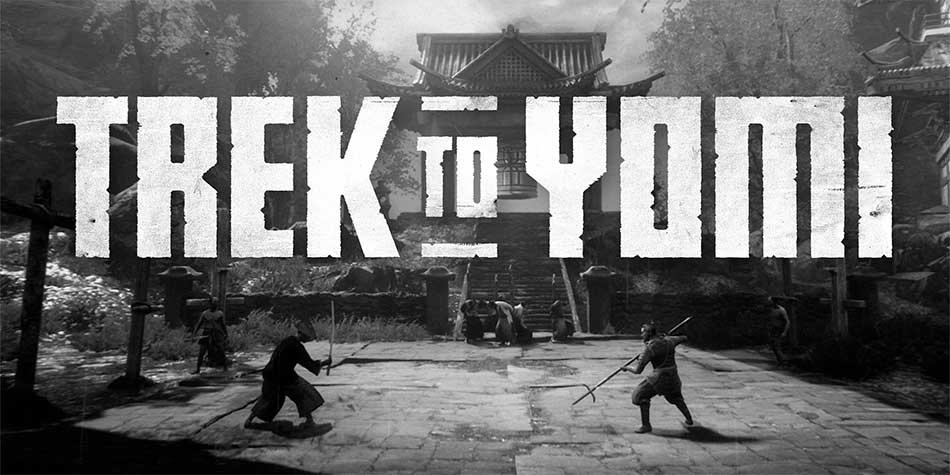
For digital artists, inspiration can turn a good project into a great one. Japanese 3D animation offers a vast source of creative fuel. It features breathtaking visuals and groundbreaking art direction.
These films blend traditional art with modern technology. 3D is used to create unique art styles and believable worlds. It also builds unforgettable characters.
This list is for creators like you. I’ll break down each film’s masterful use of lighting and character modeling. I’ll provide you with a wealth of artistic insight.
Get ready to be inspired by the best Japanese 3D animation movies you must see.
Top 15 3D Japanese Animation Movies
Space Pirate Captain Harlock (2013)
A visually stunning film known for its dramatic, stylized visuals and use of photorealistic textures on a cel-shaded base. The art direction for the spaceship and costume design is a major highlight.
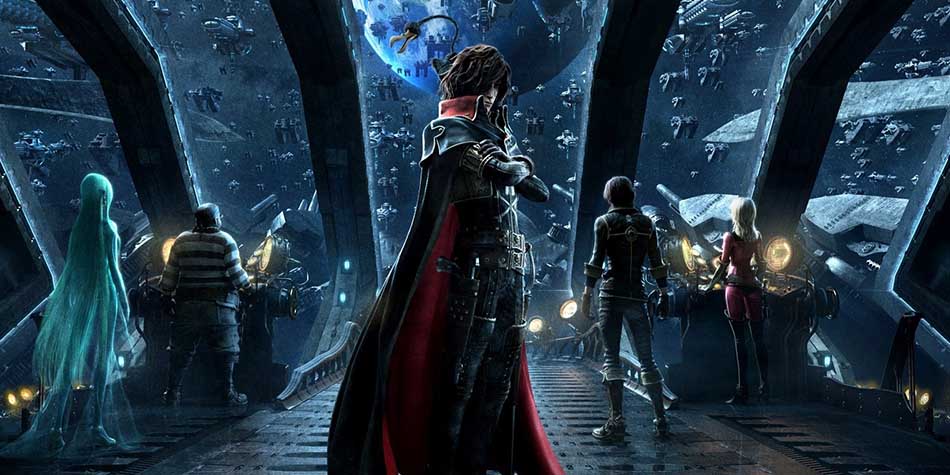
Released in 2014, Harlock: Space Pirate is considered to be one of the most technically impressive CGI movies out there. It’s a reboot of the manga series Space Pirate Captain Harlock. Originally created by Leiji Matsumoto, the character of Harlock is a rebellious, stubborn pirate.
He spends this film trying to escape assassination while uncovering a secret that could save the world.
While the story isn’t the best, and the supporting characters are not as interesting as they could be, Harlock: Space Pirate is a visual spectacle, and you can admire it from a production standpoint alone. The space battles are incredible. James Cameron described the ‘magnificent visuals … Harlock leads the way to a world of new ideas.’
Plus, the aesthetics are seriously cool: it’s a must-see for gamers, especially if you’re looking for an animated film like Final Fantasy.
Japanese Art Books
The First Slam Dunk (2022)
A massive box office hit praised for its revolutionary use of motion capture and a cel-shaded 3D style that perfectly captures the energy and intensity of the original manga.

For digital and 3D artists, the production of The First Slam Dunk is a masterclass in hybrid animation.
The film, a massive box office success, uniquely blends motion capture technology with a distinct cel-shaded 3D style to create a look that perfectly captures the energy of the original manga.
Rather than simply using motion capture for realism, the production team at Toei Animation and DandeLion Animation Studio used it as a reference for animators to portray realistic basketball movements.
This was then combined with hand-drawn 2D animation for daily life scenes and a light, desaturated color palette to intentionally evoke the feeling that the manga itself was in motion.
Technique Mixing
Filmmakers used a careful mix of techniques. The original creator, Takehiko Inoue, directed the film. They achieved a dynamic and visceral sports experience.
The movie maintained the unique artistic sensibilities of the source material. This is what made the manga so beloved.
Also Read: CG Artwork Artist Skills, Tools, Salary, and More
Lupin the 3rd: The First (2019)
A highly acclaimed film that successfully translated the iconic 2D characters into a lively, cel-shaded 3D world. It’s a masterclass in stylized character animation.
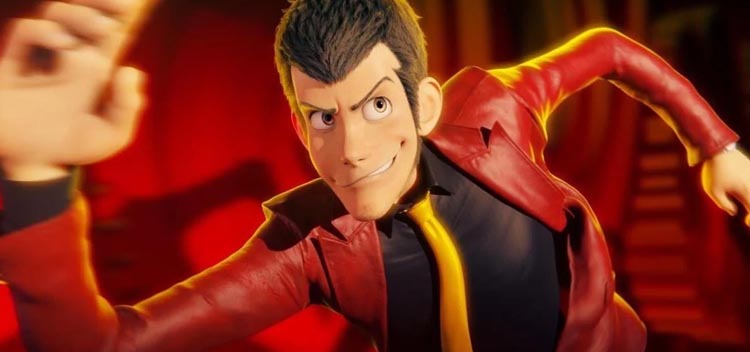
Reflecting on Lupin the 3rd: The First, I have to say it’s a true masterclass in how to translate a beloved 2D property into a 3D world. The movie is highly acclaimed for a reason.
The creative team at Marza Animation Planet, led by director Takashi Yamazaki, didn’t just slap a cel-shading filter on the characters. They went to great lengths to preserve the iconic look and feel of the original.
They developed a sophisticated facial rigging system to allow for the exaggerated squash and stretch expressions that are a hallmark of traditional animation.
I think any 3D artist would appreciate the meticulous attention to detail, from the deliberately “broken” silhouettes to the clever use of texture. This gave the models a handcrafted feel.
The result is a stylized character animation that is lively and dynamic, all while staying true to the spirit of Monkey Punch’s original designs.
Also Read: Artflow AI and the Artists Using It
Appleseed Ex Machina (2007)
A pioneering work in cel-shaded CGI that blended motion capture with traditional anime sensibilities. Its futuristic sci-fi aesthetic and dynamic action are still studied by artists today.

The legacy of Appleseed Ex Machina as a pioneering work in cel-shaded CGI is undeniable. The film remains a touchstone for digital artists. I find particularly fascinating because of its innovative blend of motion capture with traditional anime aesthetics.
Under the direction of Shinji Aramaki and produced by John Woo, the team didn’t just use motion capture for realism; they used it to anchor the characters’ body movements, creating a sense of dynamic action and weight.
Keyframe Animation
A crucial production insight is that while motion capture handled the complex body and stunt work. The animators manually handled the more nuanced facial expressions through keyframe animation, a technique that preserved the dramatic, hand-drawn feel of anime.
This combination of techniques gave the characters a unique duality. Their movements were physically grounded, but their expressions were emotionally expressive in a stylized way.
The result was a futuristic sci-fi aesthetic that still holds up and offers valuable lessons for artists looking to bridge the gap between 3D technology and 2D artistic sensibilities.

Appleseed: Alpha (Blu-ray + UltraViolet)
Left to survive in a post-World War society, two mercenary soldiers – Deunan and her cyborg partner Briareos – are sent on a mission on the outskirts of their war-torn city.
Appleseed: Alpha (Blu-ray + UltraViolet)
Also Read: 15 Best Villains in Video Games
Stand by Me Doraemon (2014)
The first fully CGI film for the beloved Doraemon franchise. Its success proved the viability of using 3D to retell classic Japanese stories and connect with new generations.

I find the success of Stand by Me Doraemon to be a powerful case study for any 3D artist tackling a beloved legacy franchise.
As the first fully CGI film for the iconic series, it was a massive gamble. But its overwhelming success proved that a 3D retelling of classic Japanese stories could resonate deeply with new generations.
A Masterclass in Lighting
The production, led by co-directors Ryuichi Yagi and Takashi Yamazaki, offers a masterclass in adapting simple 2D designs for a 3D world. I’ve learned that instead of adding excessive detail, the team took a subtractive approach to the characters, focusing on clean, minimalist designs that honored the spirit of Fujiko F. Fujio’s original drawings.
This was combined with a soft, warm lighting style and a gentle use of texture. This gave the 3D world a handcrafted, almost claymation-like feel.
This careful aesthetic choice was key to the film’s nostalgic and heartwarming tone. Demonstrating that a 3D production doesn’t always need to be hyper-realistic to be effective; sometimes, simplicity is the key to capturing an audience’s heart.
Resident Evil: Vendetta
The most technically polished of the Resident Evil CGI films. It’s an excellent case study in horror creature design, realistic character models, and cinematic action choreography.
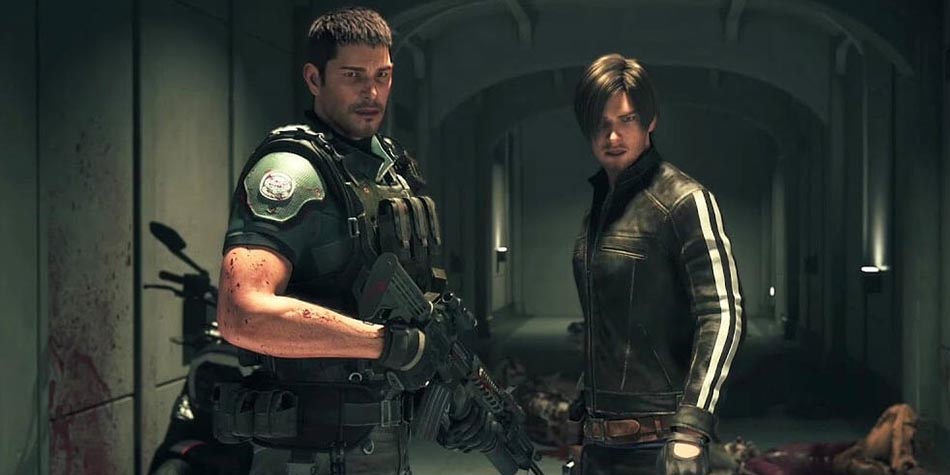
Videogame adaptions are tricky to get right, and the pressure was certainly on for this Resident Evil film.
Beloved by fans, the videogame series is incredibly popular, and fans flocked to see Resident Evil: Vendetta when it premiered in 2017.
While the plotline is hotly debated by fans, and it had mixed reviews from audiences, you can’t deny it looks good.
Vendetta makes the list for the high-quality visuals. It captures the action and horror of the games incredibly well. The action scenes are great, but it’s the slower, dialogue-based scenes that really highlight the skill involved: note the facial expressions and Easter eggs in the scenery.
Props to the production for putting their heart and soul into these small details.
![Resident Evil: Damnation / Resident Evil: Degeneration / Resident Evil: Vendetta - Set [Blu-ray]](https://vertexmode.com/wp-content/uploads/2022/06/vendetta_br.jpg)
Resident Evil: Damnation / Resident Evil: Degeneration / Resident Evil: Vendetta – Set [Blu-ray]
Resident Evil Vendetta
Soldiers battle hordes of zombies while trying to prevent a madman from unleashing a deadly virus in New York.
Get the “Resident Evil Blu-ray Set” Now!
Final Fantasy VII: Advent Children (2005)
A highly influential film that set the standard for cinematic CGI in video game adaptations. Its character work, action sequences, and high-quality rendering made it a classic for a generation of artists.
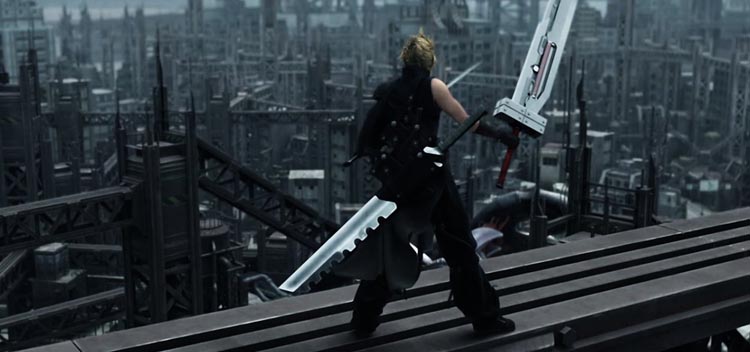
It’s impossible to overstate the influence of Final Fantasy VII: Advent Children on computer graphics and video game adaptations.
Produced by Square Enix, this film was a genuine game-changer that set a new standard for what cinematic CGI could achieve.
What is compelling for us digital artists is the film’s commitment to pushing technical boundaries. The production team, known as Visual Works, went to great lengths to create highly detailed character models.
The Touch of Visual Works
They pioneered advanced rendering techniques, including physics-based hair simulation and global illumination. This gave the characters and environments an unprecedented level of realism for the time.
This was a direct contrast to earlier films that often looked sterile. Advent Children felt alive, with dynamic action sequences and expressive character work that were years ahead of their time.
The film’s success not only solidified Square Enix as a leader in computer graphics. It also inspired a generation of artists to pursue excellence in cinematic animation.
Gantz: O (2016)
Highly praised for its stunning photorealism, particularly in its monster design and visual effects. The film demonstrates a high-level mastery of 3D rendering and compositing.
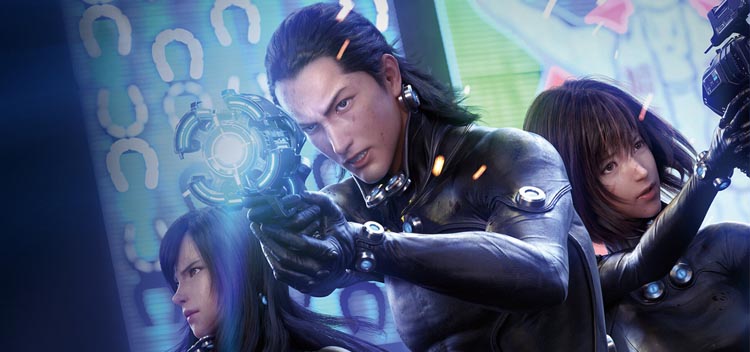
Gantz: O remains a high-water mark for photorealistic CGI in Japanese animation, and as a 3D artist, I’m captivated by the technical skill on display.
The film’s production company, Digital Frontier, truly demonstrated a high-level of lighting and compositing. Particularly in their detailed character work.
Technical Achievements
The skin rendering is remarkable, with a subtle translucency and pore-level detail that makes the characters feel alive. This was achieved by carefully balancing sub-surface scattering with the color maps.
Similarly, the hair system used thousands of individually rendered strands. The dynamic properties and specular highlights that react realistically to light.
This level of detail, especially when combined with the film’s spectacular visual effects and monster designs, elevates the animation beyond a simple adaptation and sets a new standard for photorealism in the medium.
Dragon Quest: Your Story (2019)
A charming and beautifully rendered film based on the iconic RPG series. It’s an ideal example of how to translate a beloved, stylized video game art style into a full-length 3D feature.

The enduring charm of Dragon Quest: Your Story lies in its perfect translation of an iconic art style into a stunning 3D world.
Digital artists will find this film is fascinating. Co-directed by Takashi Yamazaki, the production team faced the challenge of translating Akira Toriyama’s distinctive aesthetic into a full-length CGI feature.
The success of the film comes from a meticulously crafted 3D style that doesn’t mimic the look of the original art but captures its spirit.
The artists paid careful attention to preserving the characters’ recognizable proportions and faces.
The result is a beautifully rendered film that feels like a natural evolution of the game’s art rather than an imitation. Proving that a respectful, thoughtful approach to adaptation can breathe new life into a beloved classic.
Evangelion: 3.0+1.0 Thrice Upon a Time (2021)
While not fully 3D, this film and its predecessors are crucial for artists. It uses CGI extensively for complex scenes, mecha, and environments, showcasing how 3D can be integrated seamlessly with traditional animation.

I learned a lot from studying the hybrid animation of Evangelion: 3.0+1.0 Thrice Upon a Time.
This film is a brilliant example of how 3D can elevate traditional 2D animation without overwhelming it.
The animation company, Studio Khara, masterfully integrated CGI for the complex mecha, dynamic environments, and intricate action sequences, using it to achieve a scale and sense of motion that would be incredibly challenging with traditional methods alone.
What’s truly remarkable is how the 3D elements are rendered and composited to match the hand-drawn aesthetic. With a similar sense of linework and color palette that makes the two forms of animation feel seamless.
This approach demonstrates a deep understanding of animation and proves that 3D can be a powerful tool to enhance, rather than replace, the artistic vision of a 2D production.
Ghost in the Shell 2: Innocence (2004)
Another groundbreaking hybrid. Director Mamoru Oshii pioneered the use of CGI to create hyper-detailed backgrounds, stunning architectural shots, and complex vehicle animations that were years ahead of their time.

I believe any 3D artist should study the visual language of Ghost in the Shell 2: Innocence because it’s a testament to how CGI can be a foundational element in a 2D animated world.
Director Mamoru Oshii and the team at Production I.G were truly pioneers in this hybrid approach. They created hyper-detailed backgrounds and stunning architectural shots. This gave the film its dense, lived-in futuristic feel.
Inspiration for Years to Come
The CGI was used to create the very fabric of the world. From complex vehicle animations to the breathtaking opening “Shelling Sequence” that seamlessly blends CG with traditional drawings.
This groundbreaking aesthetic influenced a wide range of pop culture, perhaps most famously lending its thematic and visual inspiration to films like The Matrix.
By using 3D to build a this amazing world, Innocence showed how computer graphics could push the boundaries of 2D animation and make a film feel far more immersive.
Vexille (2007)
A gritty, dystopian sci-fi film that uses a unique, rotoscoped cel-shaded style. It’s an interesting case study in how to create a distinct visual identity with 3D animation.

The visual identity of a film is crucial. That’s why Vexille is such a fascinating case study for any 3D artist. This gritty, dystopian sci-fi film used a unique rotoscoped cel-shaded style to create a distinct and memorable aesthetic.
The production’s importance on the improvement of CG animation in Japan can’t be overstated. It proved that Japanese studios could create a high-quality, stylized look that was a departure from Hollywood’s focus on photorealism.
An Original IP
Directed by Fumihiko Sori, the film blended motion capture with a painterly, rotoscoped texture to achieve a sense of realism. It was grounded in its visual style rather than its technical fidelity. The film is not based on a pre-existing franchise. The film’s cyberpunk themes and visual flair are deeply rooted in a rich Japanese cultural tradition established by seminal works like Akira and Ghost in the Shell.
This made Vexille a significant project that pushed the boundaries of stylistic 3D animation. It contributed to the diversity of Japan’s CG output.
Knights of the Zodiac: Saint Seiya (2014)
A modern CGI retelling of the classic anime. While the art style is divisive, it’s a great example of a contemporary attempt to bring a classic IP to life using full 3D animation.

The 2014 theatrical film, subtitled Legend of Sanctuary, was produced by Toei Animation. It represents a bold attempt to reimagine the iconic characters and their Cloths in a full 3D environment.
For 3D artists, the production’s key challenge was translating the unique proportions and hand-drawn details of Masami Kurumada‘s original manga art into cohesive, expressive 3D models.
Controversy About the Style
The art style was divisive among fans. But the film’s successful action sequences and the massive scale of the Sanctuary showcased a significant advancement in Toei’s CG capabilities at the time.
It is important to distinguish this film from the subsequent 2019 Netflix original series. Also titled Knights of the Zodiac: Saint Seiya, which was a separate CG production that is available on the streaming platform. This one offers another modern take on the classic anime.
This illustrates the ongoing efforts to leverage 3D technology to reintroduce beloved franchises to a new generation.
Final Fantasy XV: Kingsglaive
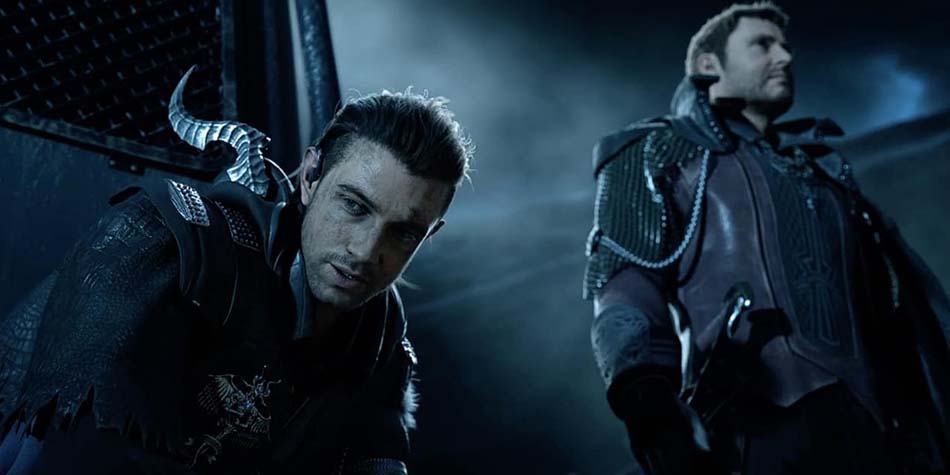
Final Fantasy XV is an open-world videogame with plenty of lore for the player to discover. Kingsglaive is designed to go alongside it, plugging some of the gaps left by the story. When I say deep lore, however, I mean really deep.
You’ll need to follow this one closely to understand what’s happening, and it does get complicated, so accept the fact that you might have to rewind it a few times.
It is a stunning technical achievement by VFX studio Imagine Engine and Square Enix. The landscapes are gorgeous and almost eerily realistic at times. Humans are hard to animate well, but they’ve knocked it out of the park in that respect.
The fight scenes are a spectacle, with dizzying non-stop movement, exciting weapons, and awesome superpowers. Fans will enjoy how authentically ‘Final Fantasy‘ it feels, especially in terms of the setting and the characters.
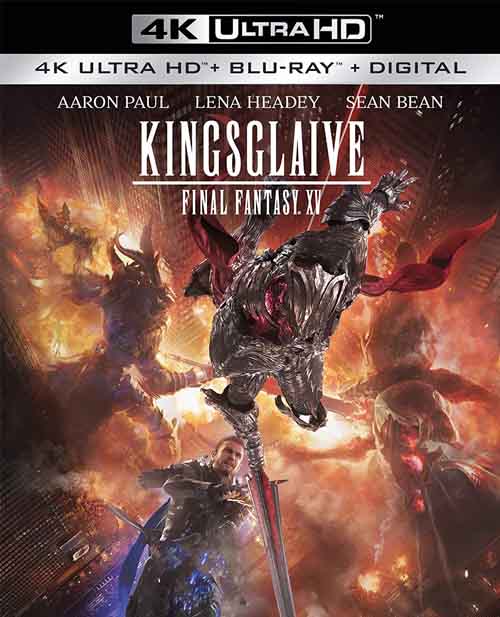
Kingsglaive: Final Fantasy XV 4K UHD
The magical kingdom of Lucis is home to the sacred Crystal, and the menacing empire of Niflheim is determined to steal it. King Regis of Lucis (Sean Bean) commands an elite force of soldiers called the Kingsglaive.
Get “Kingsglaive: Final Fantasy XV” Now
Tekken: Blood Vengeance (2011)
A popular film based on the fighting game series, praised for its dynamic action choreography and detailed character models. It’s a great example of CGI used for fast-paced, stylized combat.
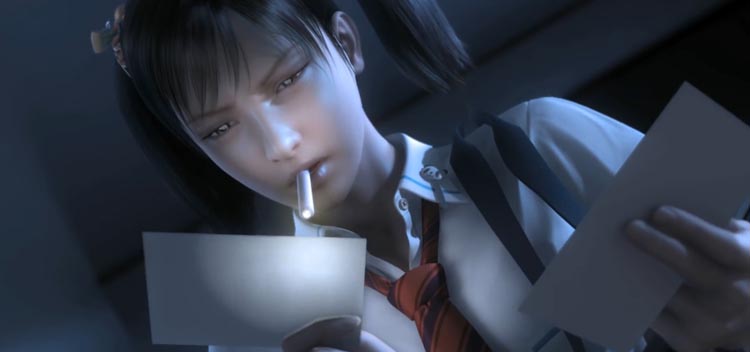
When a 3D artist wants to study fast-paced, stylized combat, Tekken: Blood Vengeance is an excellent resource.
This popular film, based on the fighting game series, is praised for its dynamic action choreography and detailed character models.
The production team, headed by Digital Frontier, was able to translate the over-the-top martial arts and special moves from the game into a cinematic experience that felt both fluid and impactful.
A key insight is how they leveraged CGI to create not just the characters but also the “impact frames” and visual effects that give each hit a satisfying weight.
This attention to detail in the action sequences, combined with a meticulous rendering of the characters’ outfits, skin, and hair, makes the film a fantastic example of using CGI to capture the high-octane energy of a beloved gaming franchise.
Final Thoughts
This curated list of Japanese 3D animation movies is more than just a watch list—it’s a goldmine of creative inspiration for artists and creators. By blending traditional art with cutting-edge technology, these films showcase masterful techniques in cel-shaded rendering, photorealistic environments, and stylized character design.
Each movie on this list serves as a testament to the incredible power of authentic cultural inspiration. If these films have inspired you to infuse your own work with the beauty and depth of Japanese design, you’re in the right place
Tools and Resources for Digital Artists
At Vertex Mode, we provide the tools and resources you need to take that next step.
Explore our premium 3D assets and environment kits to build your own worlds, dive deeper with our curated artbooks for artists to master the reference material, and learn the techniques with our in-depth tutorials.
Your next masterpiece awaits.
Read Next: How to become 3D Artist

Megan is a freelance writer based in Somerset, England, with a passion for storytelling across multiple mediums. She writes about video games, books, and pop culture, bringing a thoughtful and engaging perspective to the subjects she covers. With a love for both interactive and traditional narratives, Megan enjoys exploring how stories shape the way we play, read, and connect with the world around us.
At Vertex Mode, Megan contributes articles that dive into the cultural and creative impact of entertainment. Whether she’s analyzing the themes of a newly released video game, reviewing a book that’s sparking conversation, or reflecting on broader trends in pop culture, her writing combines insight with accessibility. She believes that the best content not only informs but also invites readers to share their own experiences and perspectives.
Megan’s expertise lies in connecting the dots between media and audience. Her writing often highlights how games and books can inspire imagination, encourage community, and reflect the times we live in. By blending personal enthusiasm with research and analysis, she delivers content that resonates with casual fans and dedicated enthusiasts alike.
Through her work with Vertex Mode, Megan continues to celebrate creativity in all its forms, helping readers discover new stories, revisit old favorites, and appreciate the evolving landscape of pop culture.